Art in the Hall with the Town of Okotoks
Earlier this year Okotoks held a lottery amongst members of the Okotoks Art Gallery to have art featured for 6 months in a public building. I submitted an Octopus vase and was selected. I was given a large space to display and offered the opportunity to display multiple pieces. With this I made the decision to create a series of Canadian animals that played significant roles in their ecosystems. They will be displayed September 2026-February 2027 in the Okotoks Recreation Center.
Each piece holds a special place in my heart as I have a background in Environmental Pracice and Nature Interpretation. Nature and its processes play a large role in most of my work, but these were created with the audience in mind. The Recreation Center will host hundreds of children and teenagers playing sports over the winter. My hope is that these cute critters attached to their vases will connect those young minds to the bigger ideas of ecosystems and the roles they may play in the world.
Here is the series
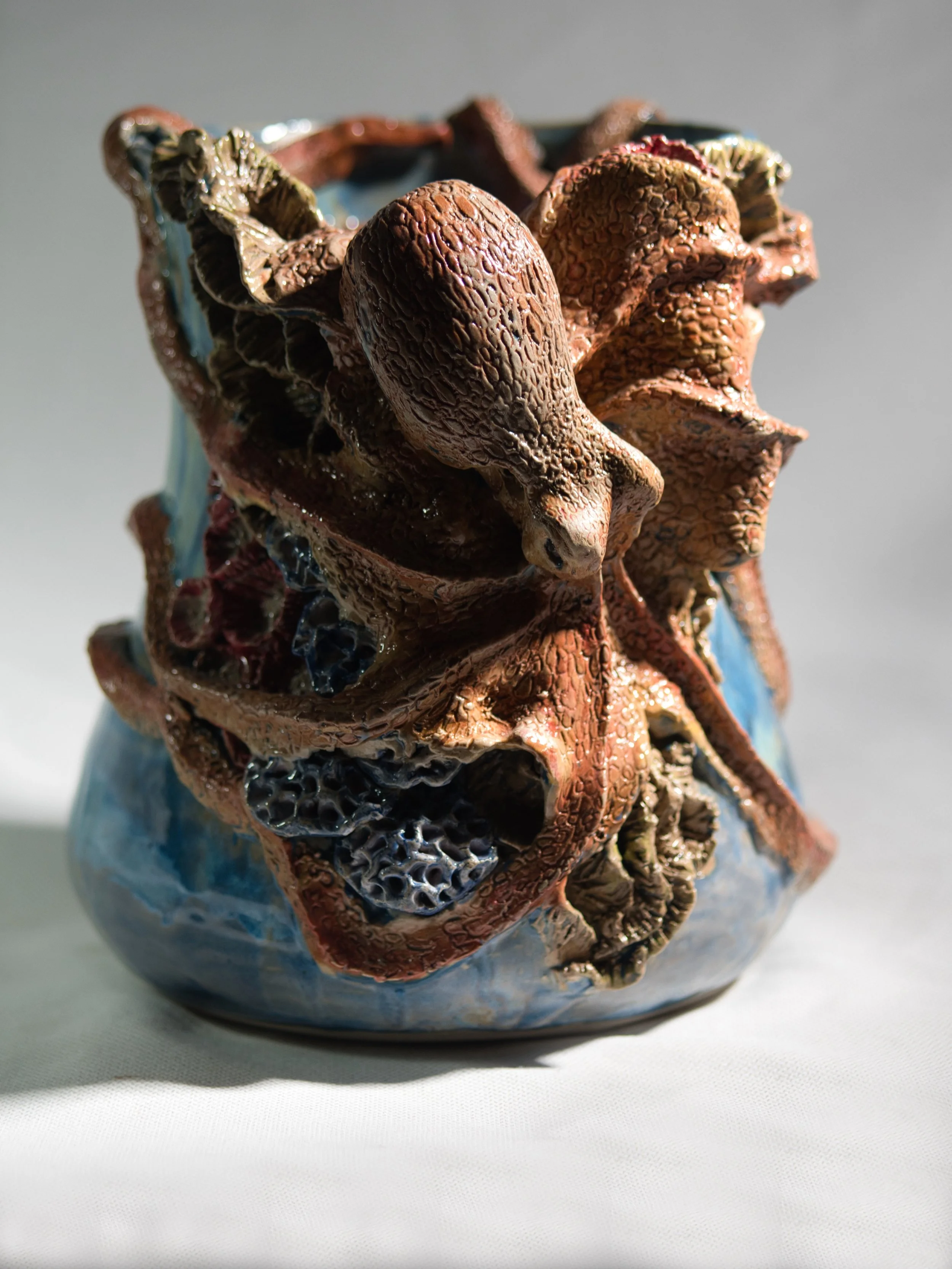
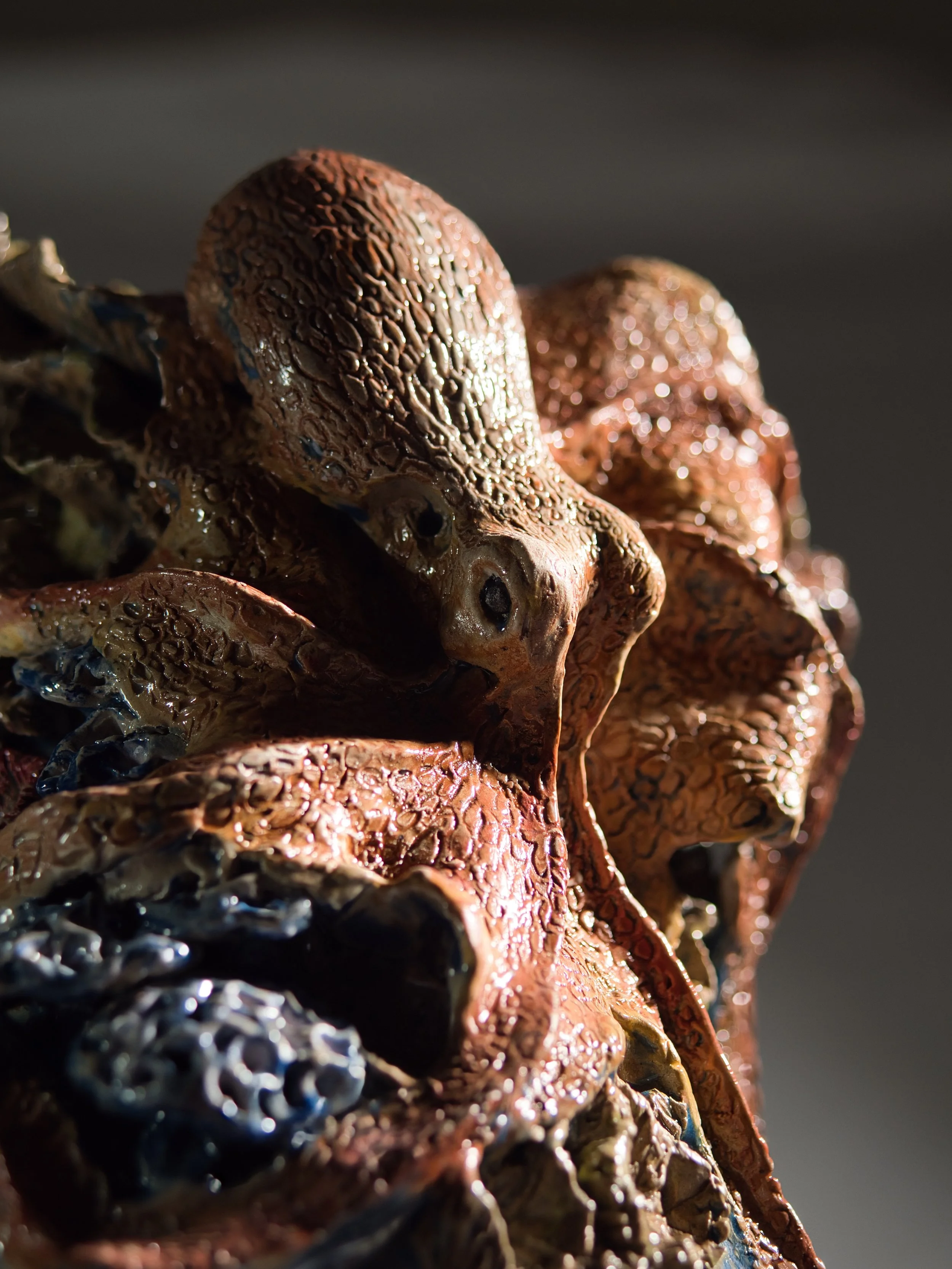
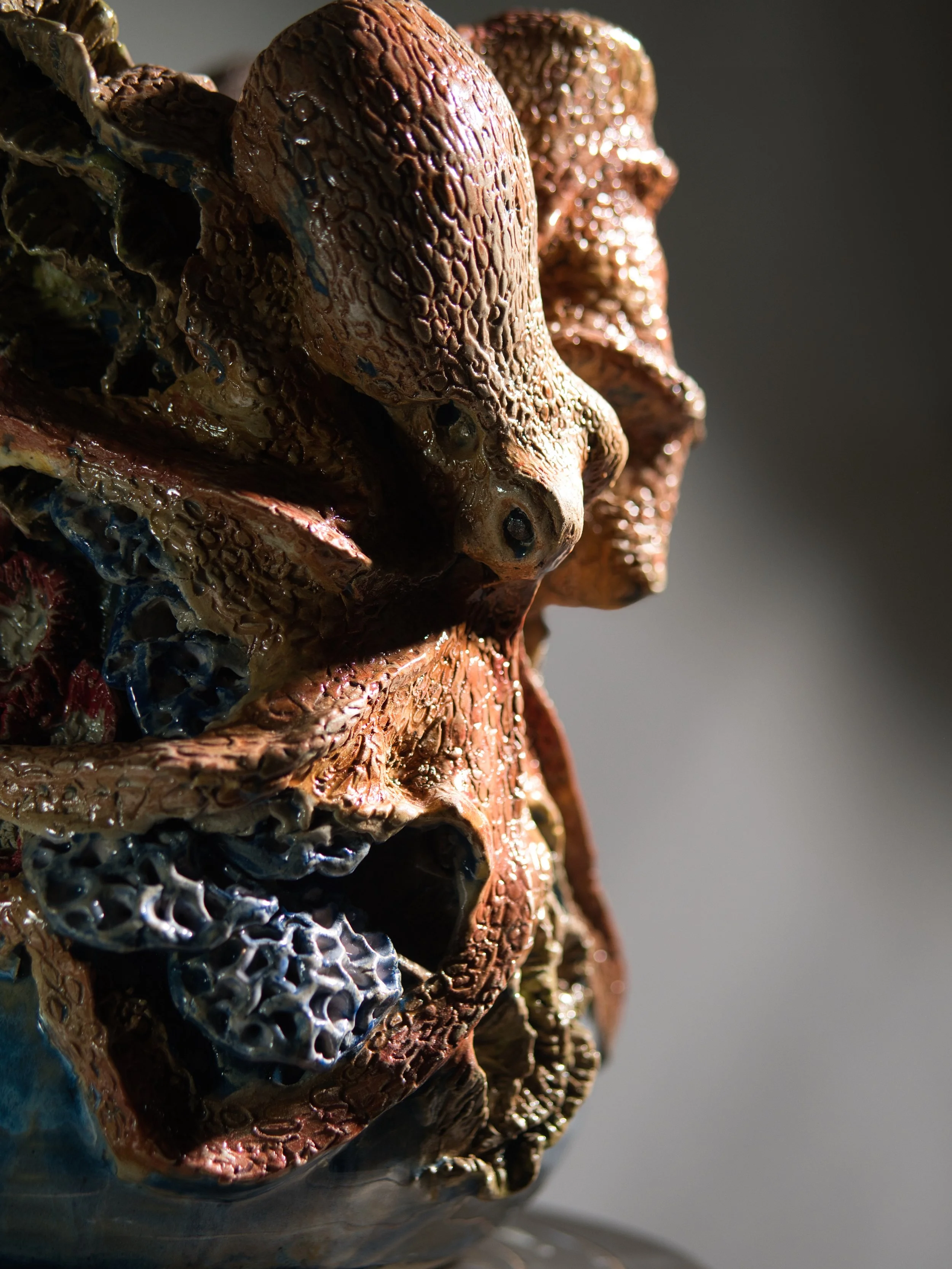
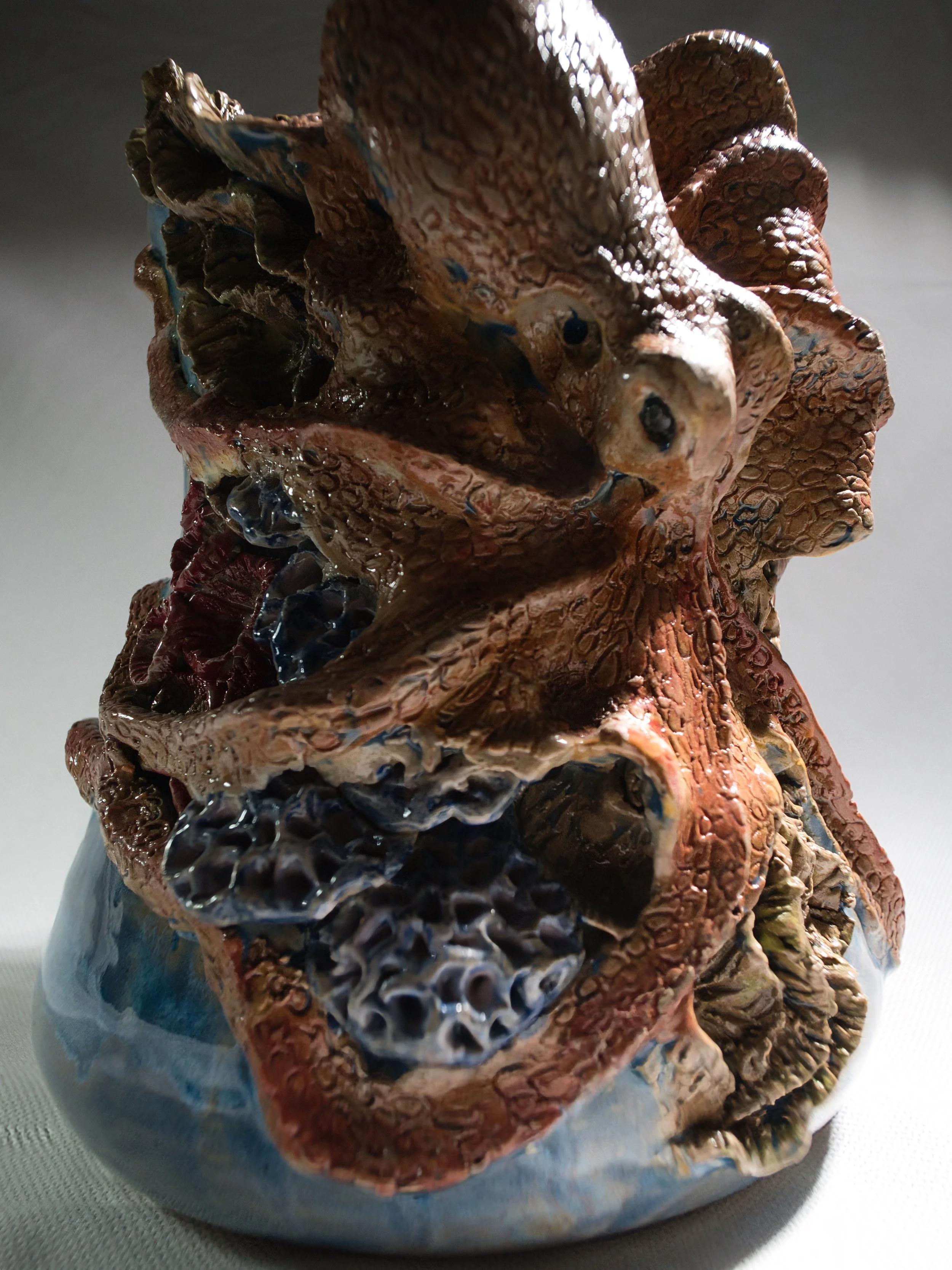
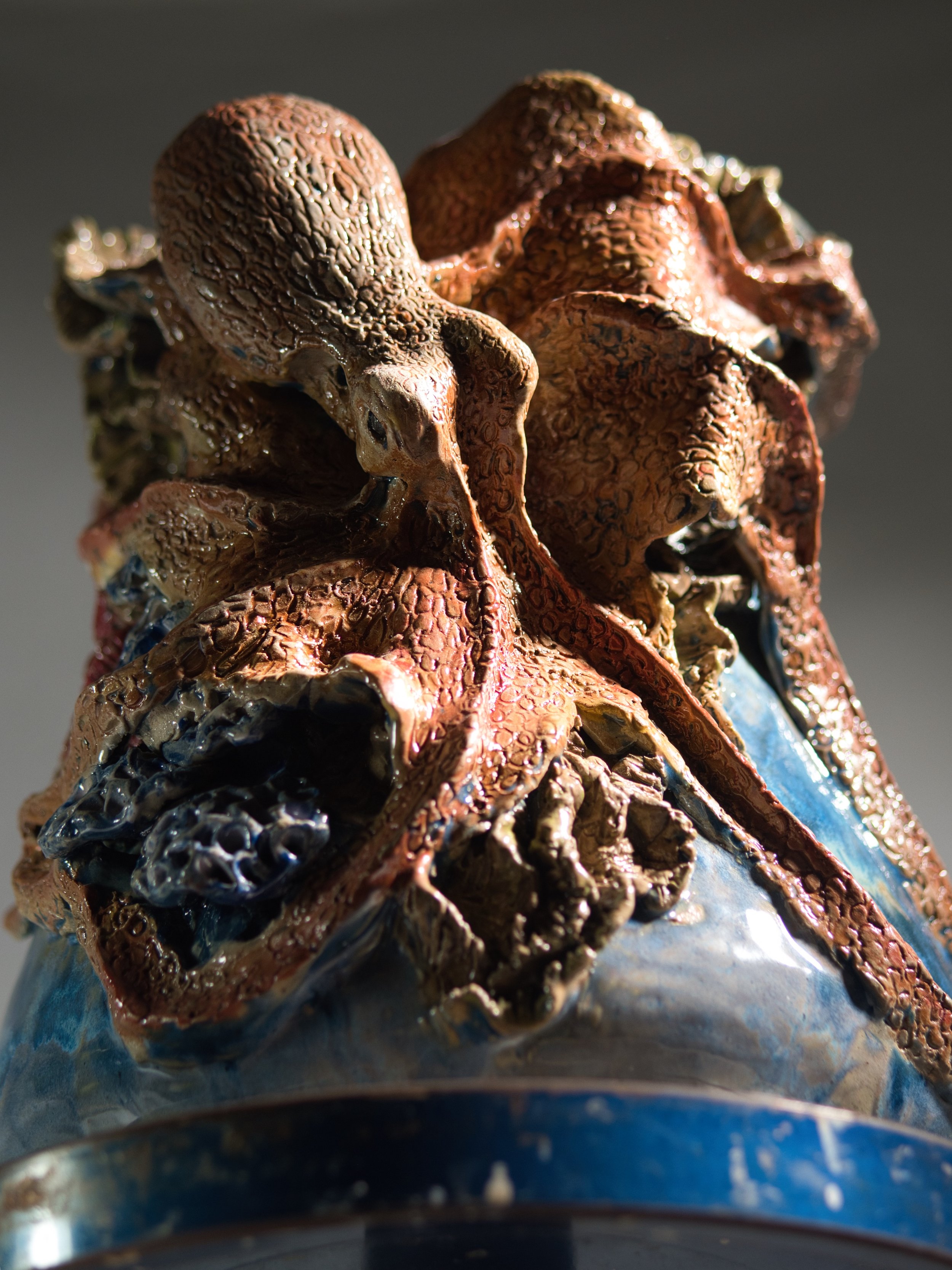
Giant Pacific Octopus
This octopus plays a big role as a keystone predator and habitat engineer. By feeding on the creatures that graze on kelp, it keeps their numbers in check and helps protect the kelp forest itself. Octopuses also leave behind empty shells as they hunt — shells that become homes for other small sea creatures, turning leftovers into new habitats.
This vase captures an octopus guarding its shell, now overgrown with coral. Octopuses are masters of hiding, able to squeeze into tiny spaces and shift their color to nearly vanish against their surroundings.
The vase was thrown on the wheel, with the octopus and coral hand-sculpted on top — every texture individually carved. Layers of underglaze bring the creatures to life, and the glaze finishes it with an underwater glow.
Sea Otter
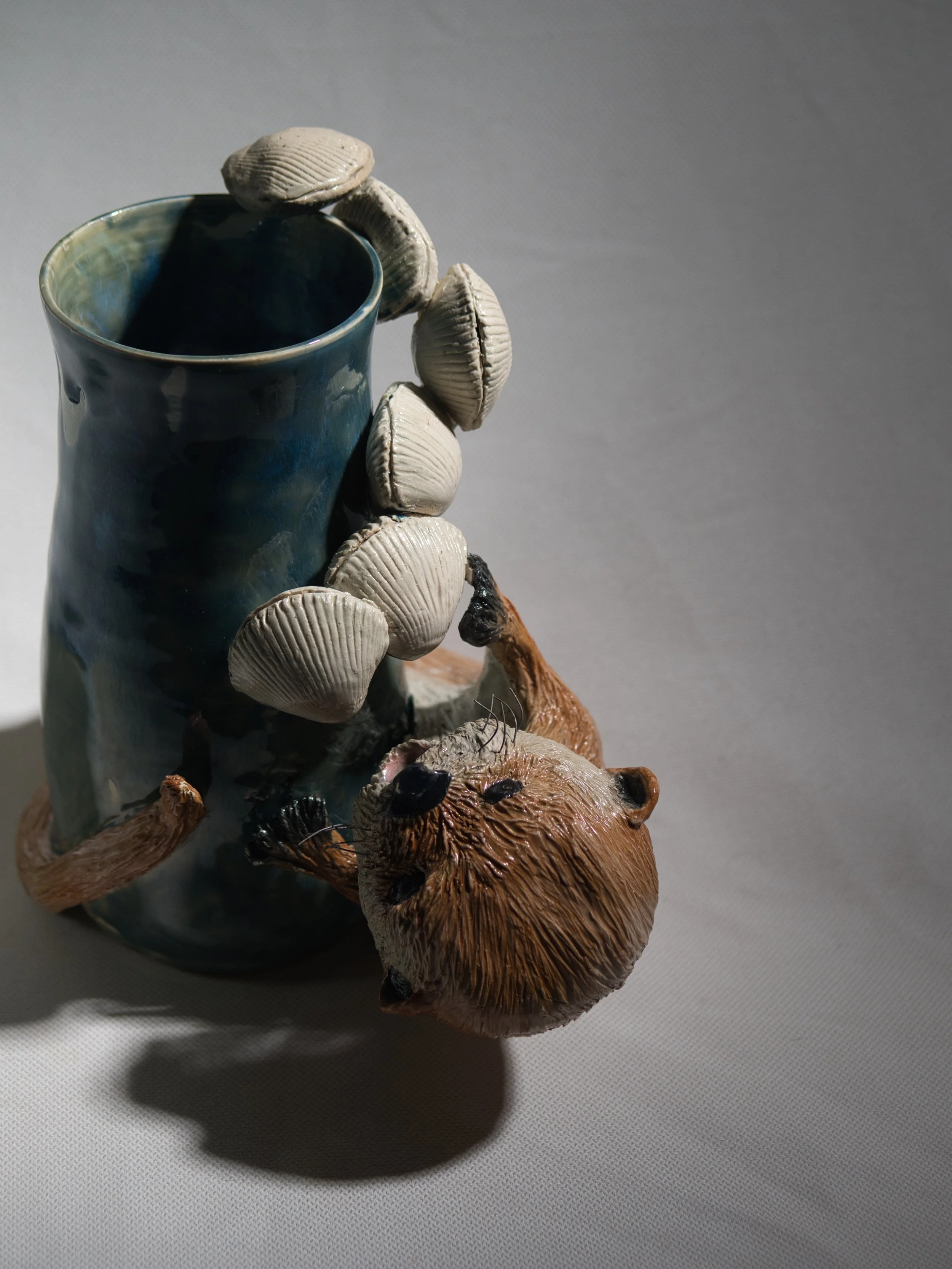
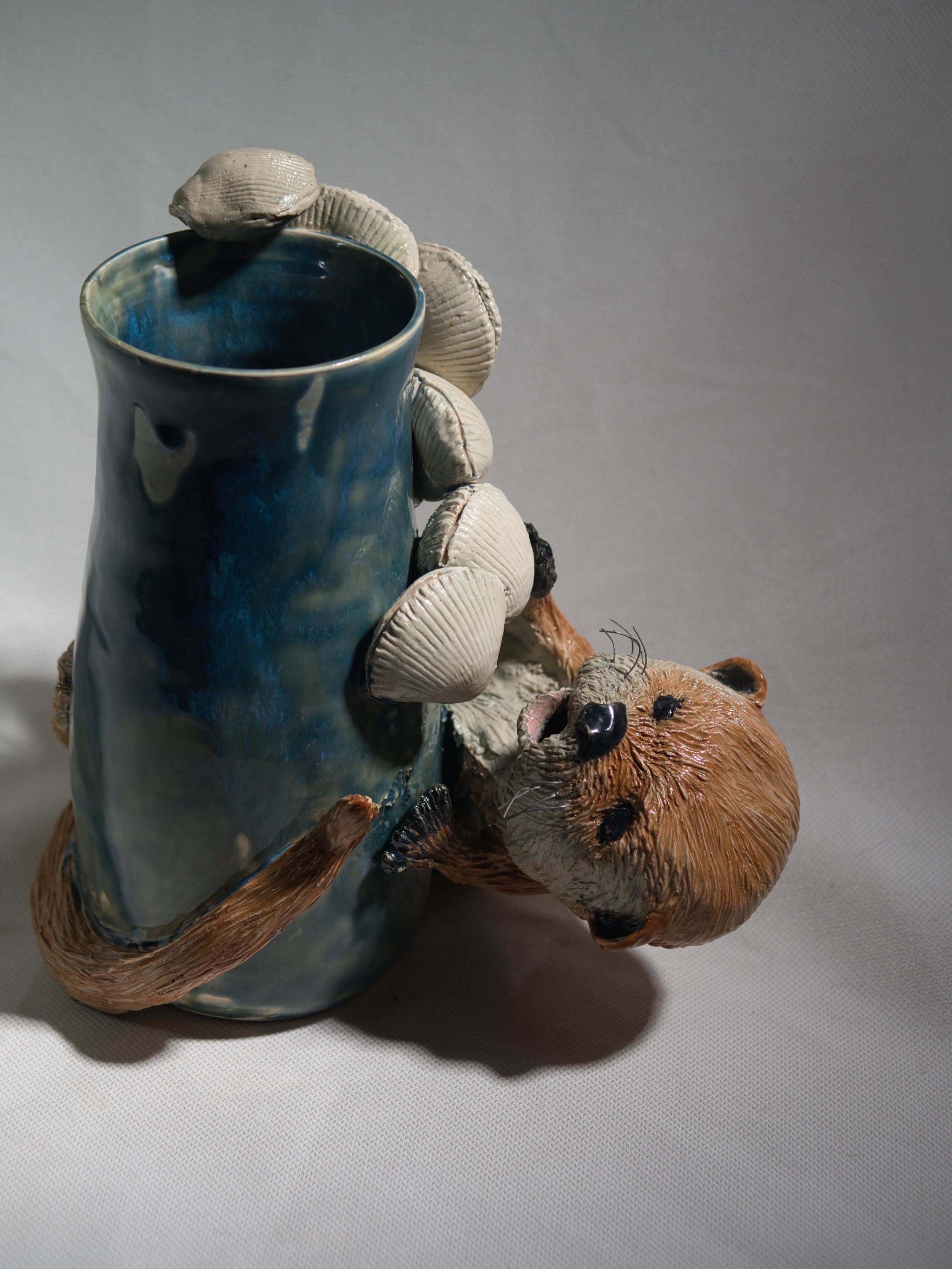
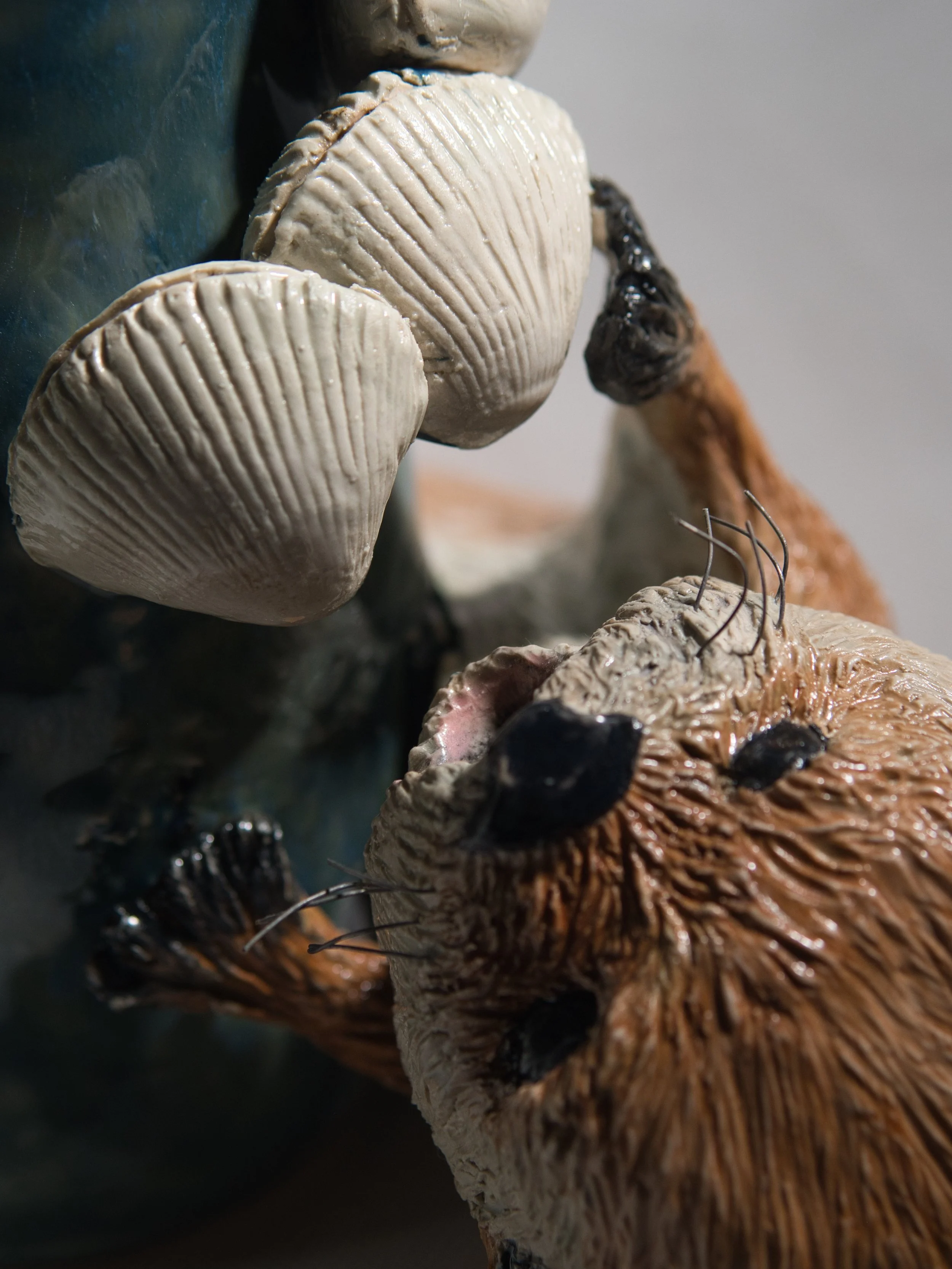
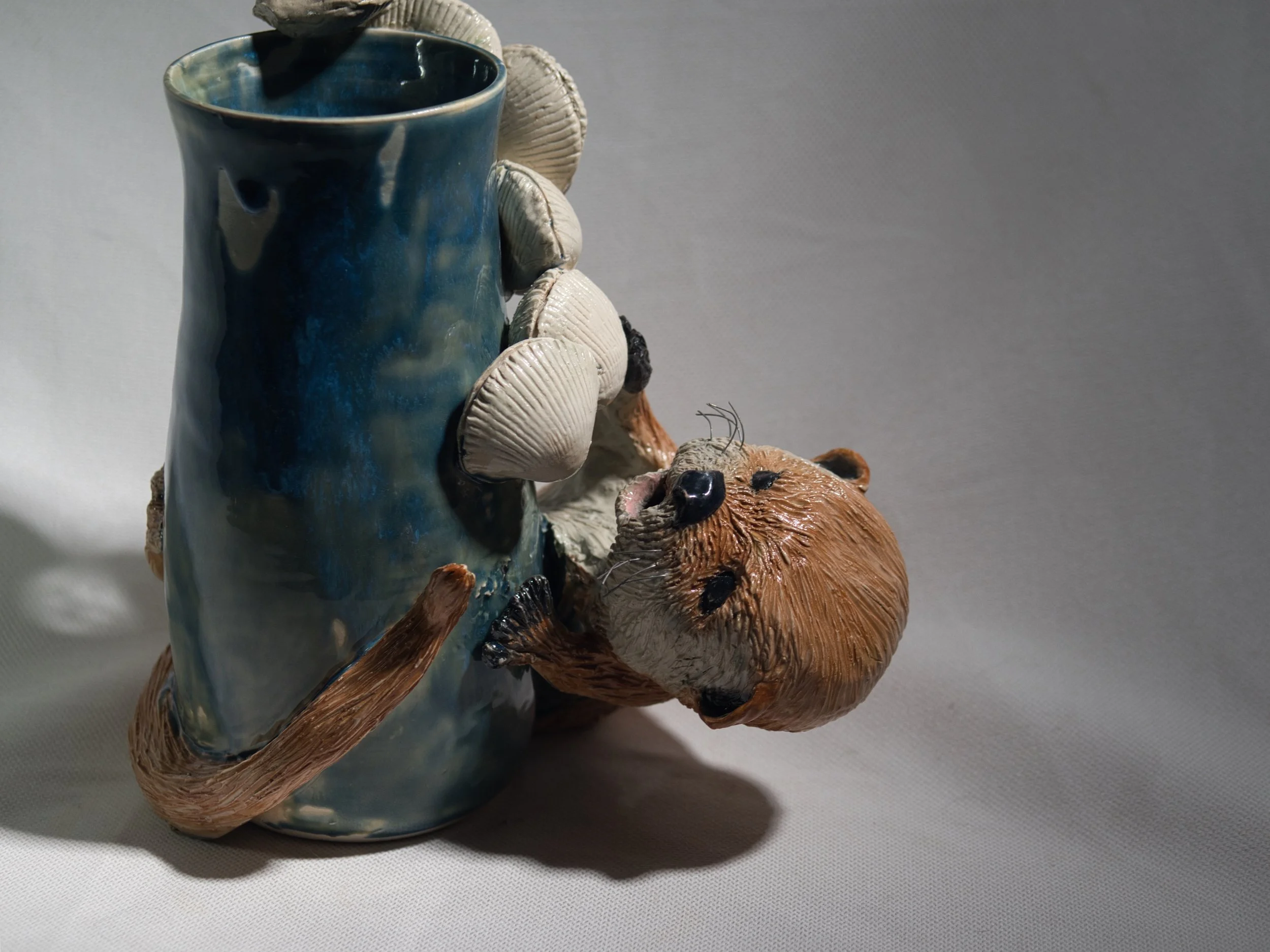
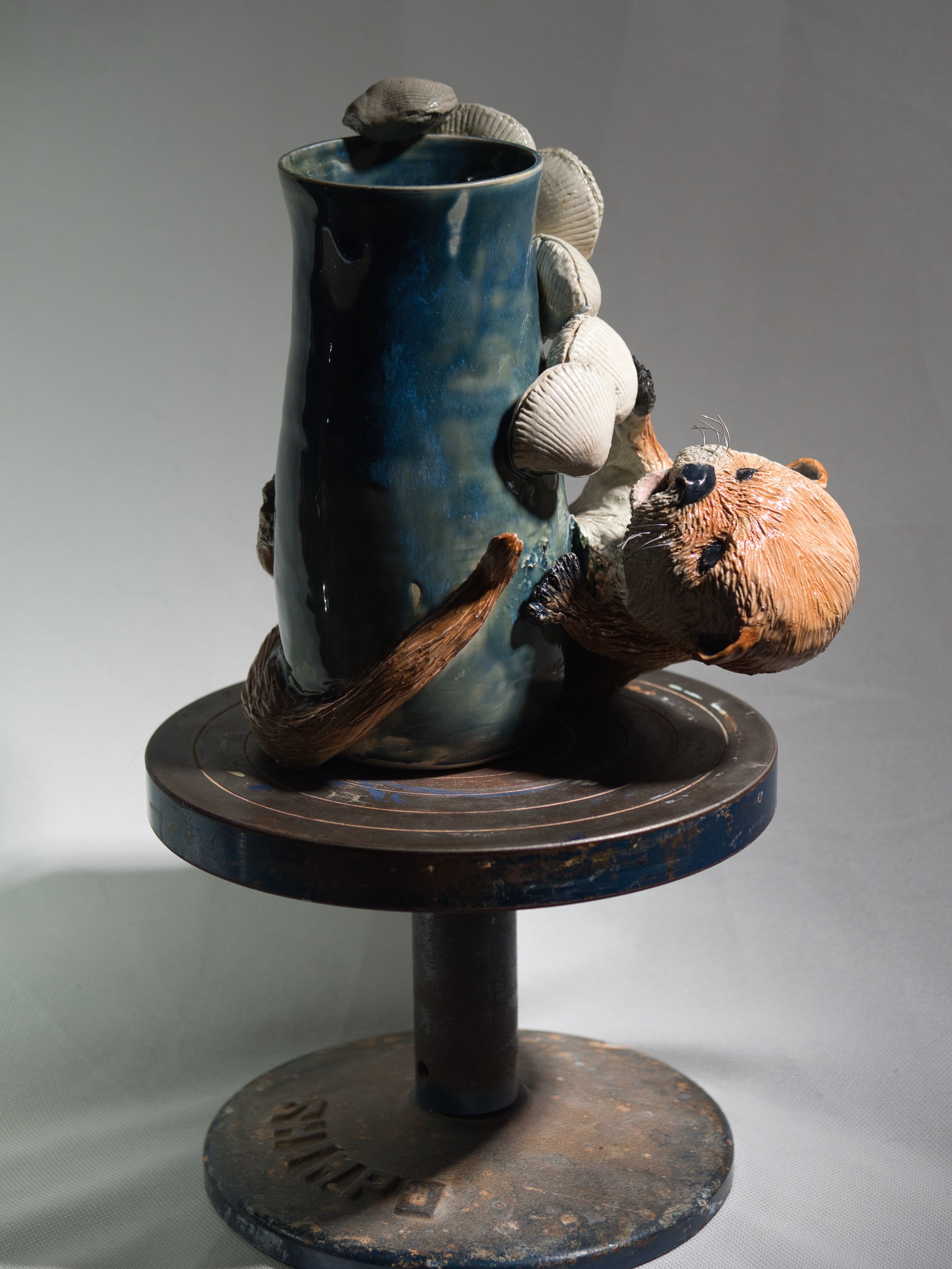
Otters are known for being playful, adorable, and family-oriented, living in rivers and seas around the world. This one is a sea otter. Its fur is famously dense — two layers thick — keeping it warm and waterproof in cold coastal water.
Sea otters are a keystone predator, keeping urchin populations down and protecting kelp forests from being overgrazed. They're also an indicator species: their health and presence reflect the overall condition of nearshore coastal ecosystems. Shifts in otter populations can warn scientists early about pollution or water quality problems — issues that affect humans too. In short, otters depend on a balanced ecosystem, and by watching them, we can tell how balanced that ecosystem really is.
This otter circles the vase, collecting treats hidden inside the shells. The otter is hand-sculpted and painted in layers of underglaze. The shells were pressed from a real west coast shell I found. The vase itself was thrown on the wheel and glazed to give it an underwater feel.
Beaver
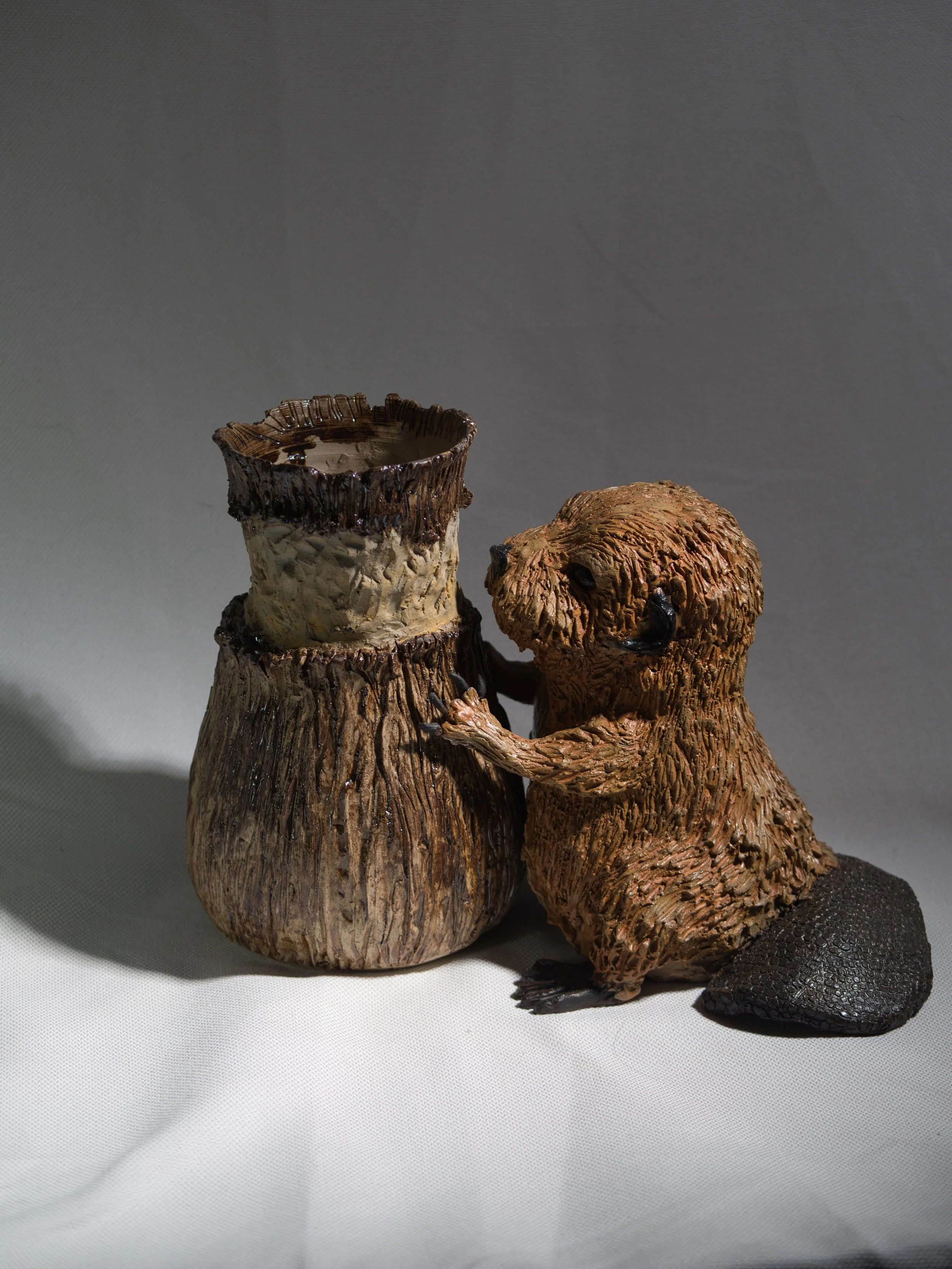
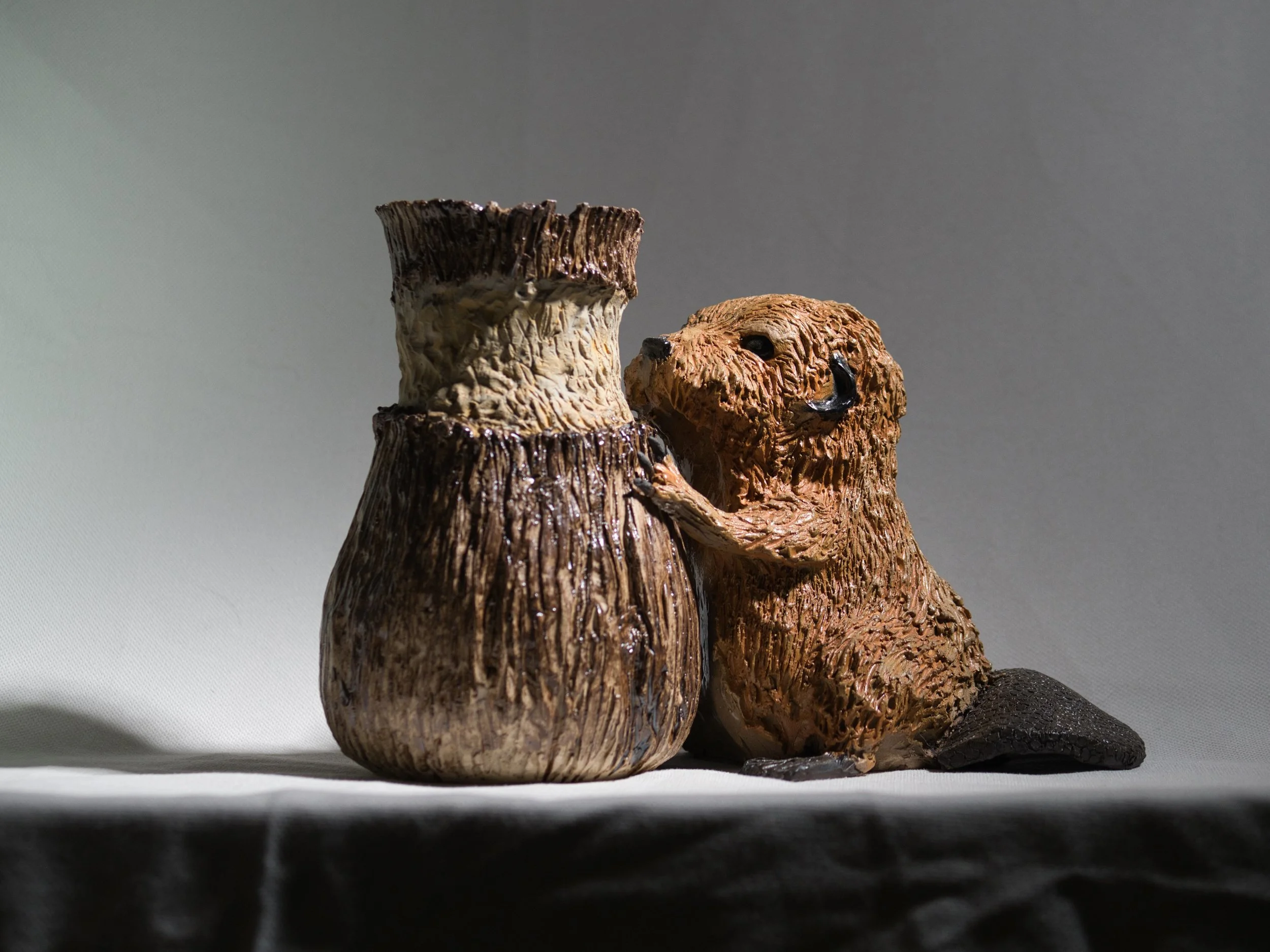
Beavers once ranged across the prairies of North America and Europe, but were widely hunted for their dense, double-layered fur — prized for fancy hats and clothing. As they were over-hunted and the land settled, the beavers that remained were pushed out. Their dam-building, which flooded the very areas people were building on, made them unwelcome neighbours.
What we understand now is how important beavers are as ecological engineers. Their dams reshape landscapes, creating wetlands that keep their homes safe from predators. But those same wetlands become homes and breeding grounds for countless other animals and insects — some even winter alongside the beavers in their dens. Beavers are also strong family animals, mating for life and working hard together. As rodents, they must chew constantly to wear down teeth that never stop growing.
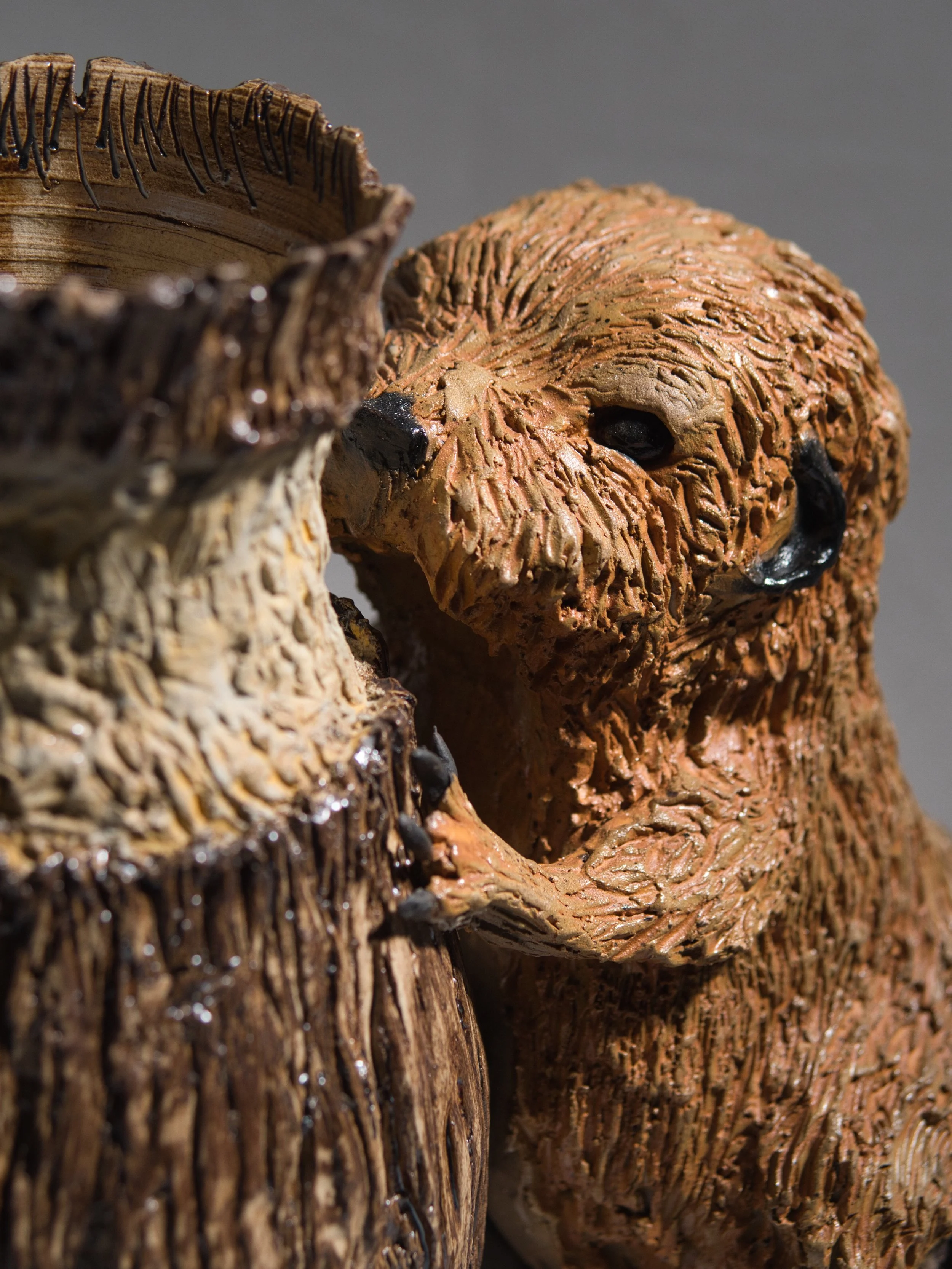
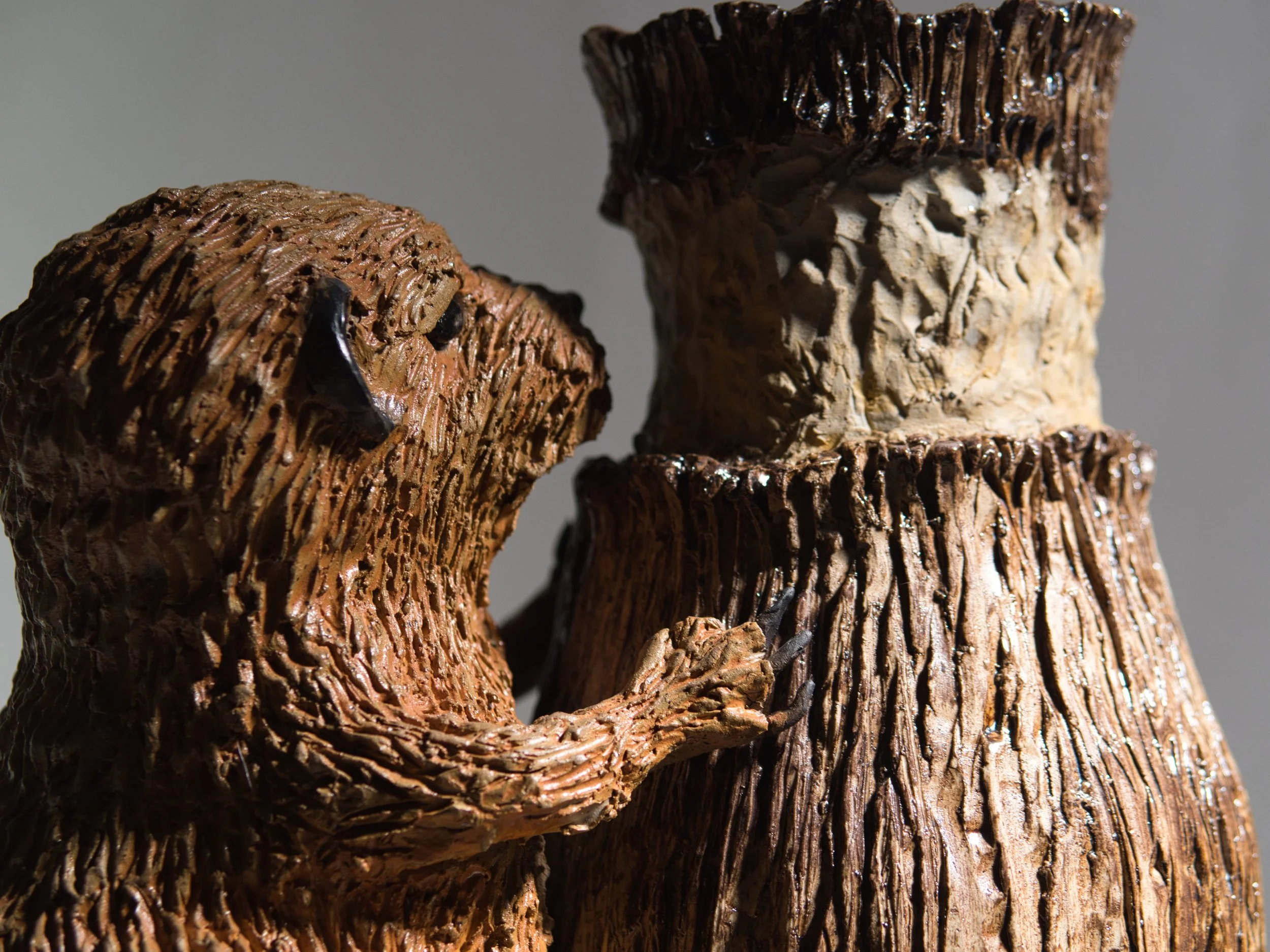
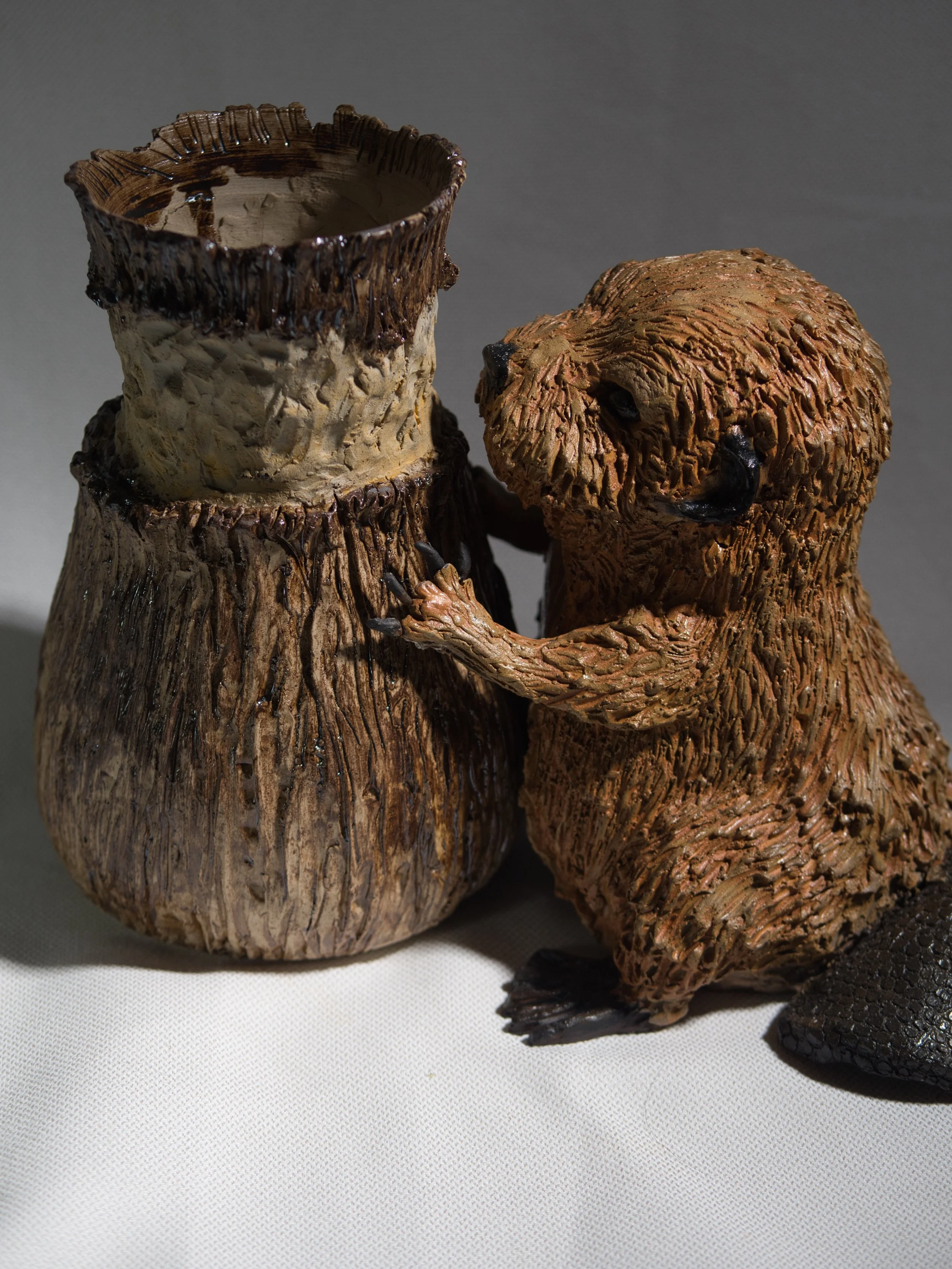
This little beaver is chewing away at its vase, still wet from the pond. The piece was thrown on the wheel, then hand-carved, using three different colors of clay and a minimal touch of glaze and underglaze.
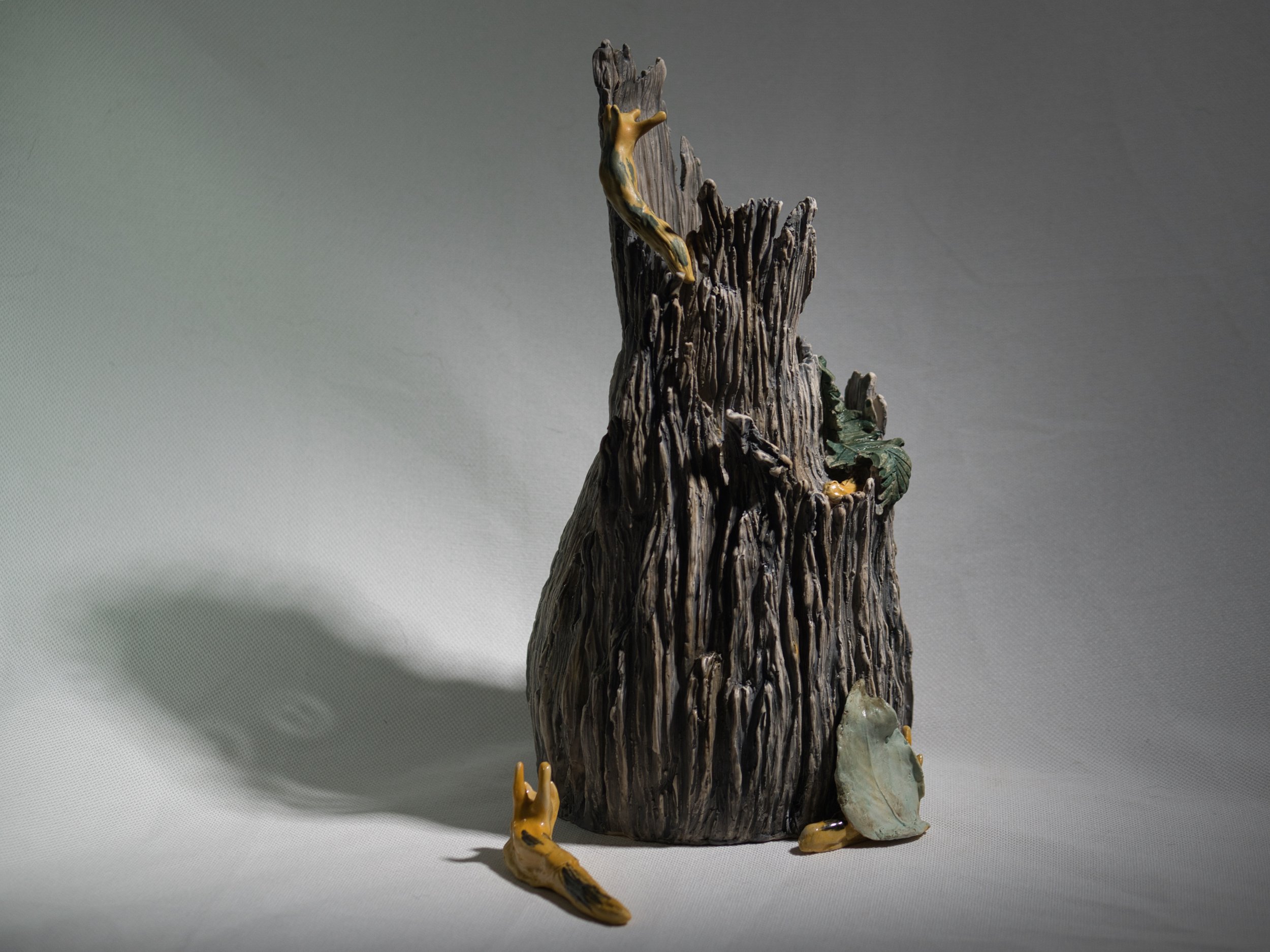
Slugs
Decomposers are an incredibly important part of any ecosystem. Without them, dead plants and animals would pile up faster than nature could ever clear them. Decomposers break that material down, creating the rich new soil that supports the next generation of life.
Slugs are a key part of this system. They're shell-less gastropods, close cousins to snails, but far more exposed to the world around them — they rely on a layer of protective mucus that must stay moist to survive. That's why you'll find them in damp places, and why they're most active in the early morning and during rain.
Slugs feed on dead leaves, rotting wood, fungi, moss, and animal waste. They're nature's clean-up crew — clearing debris before it piles up on the forest floor — and when they eat mushrooms and fungi, they help spread spores across the environment. They also eat live plants, which makes them considered a pest to gardeners and farmers.
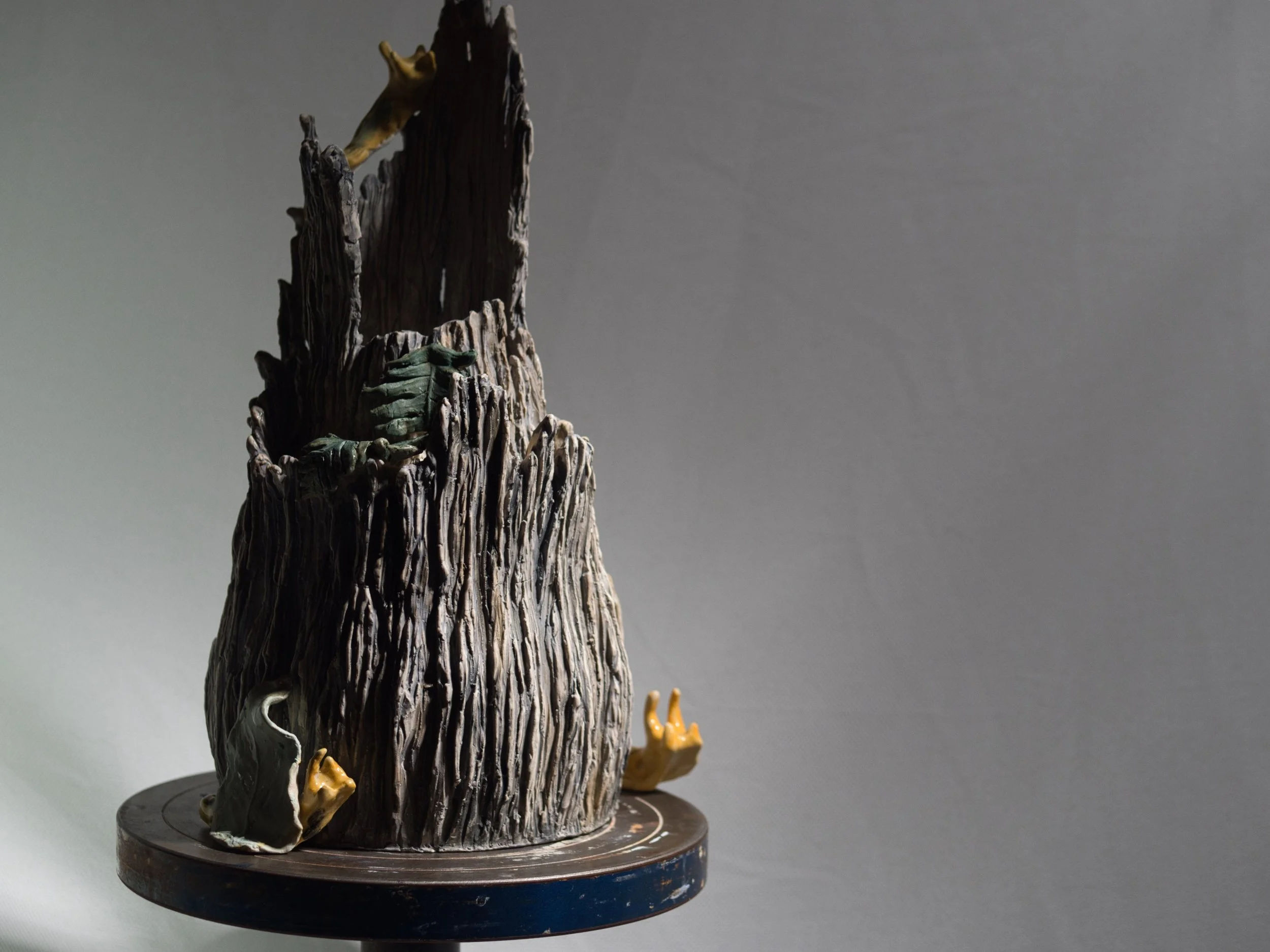
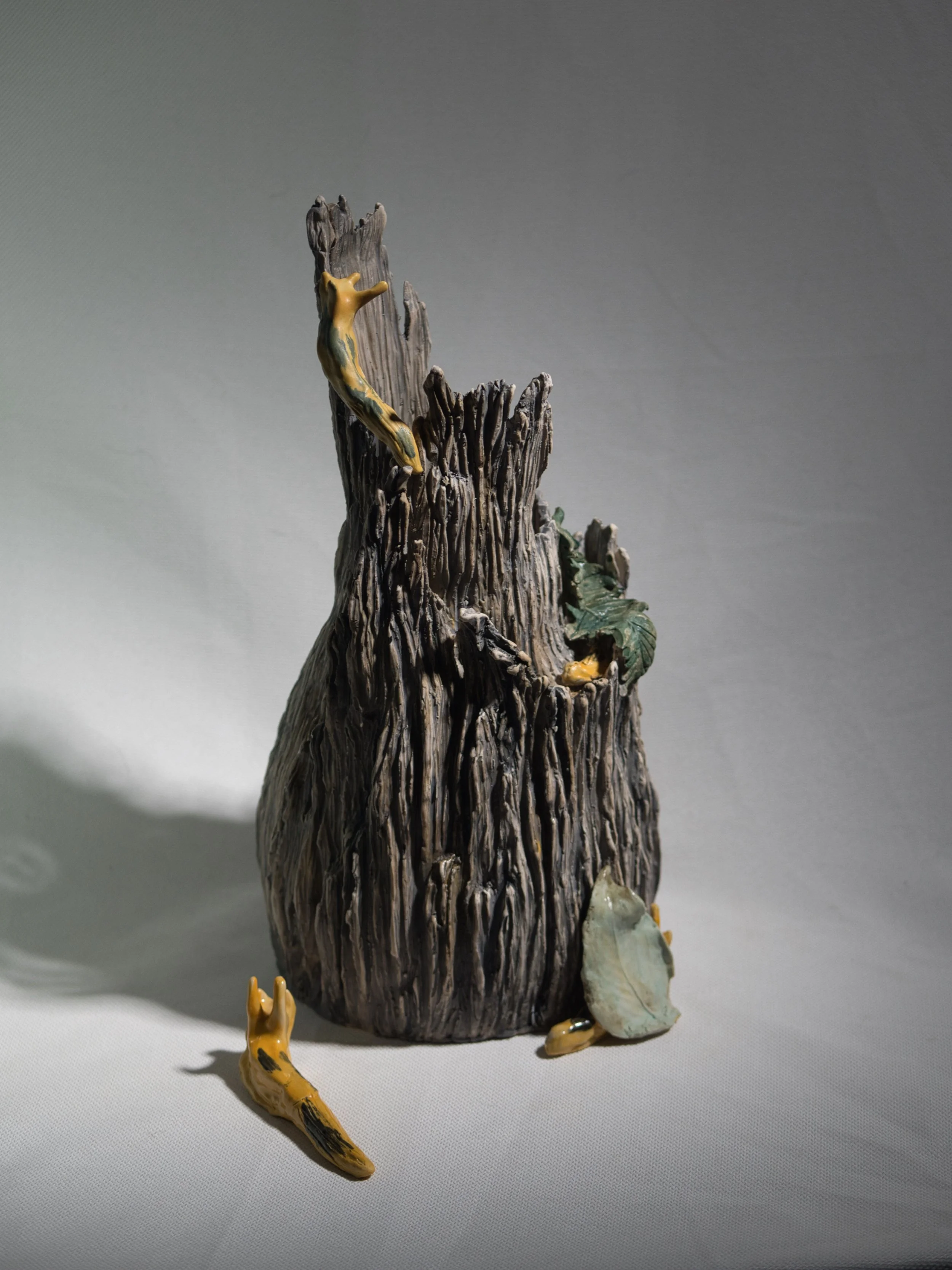
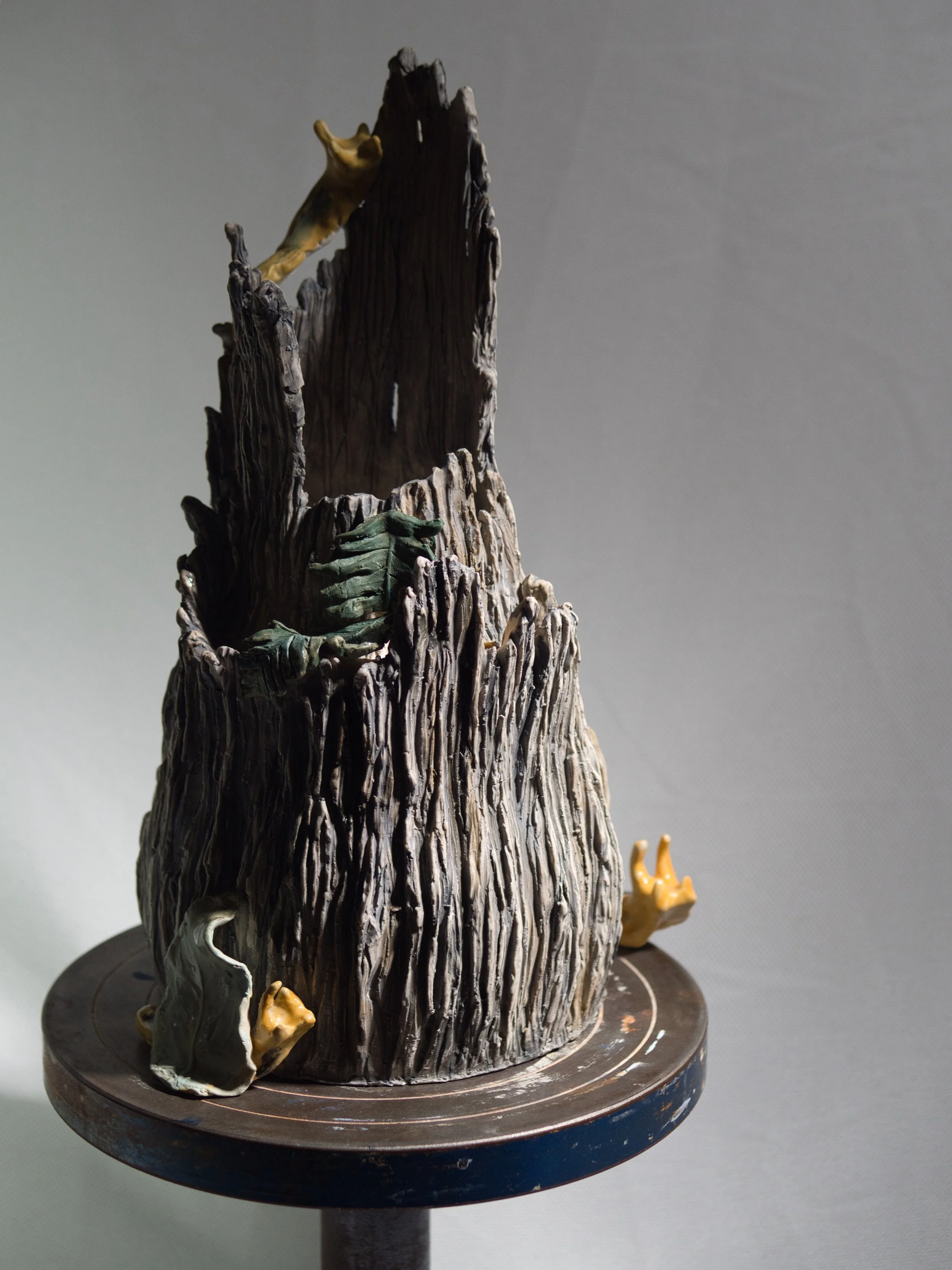
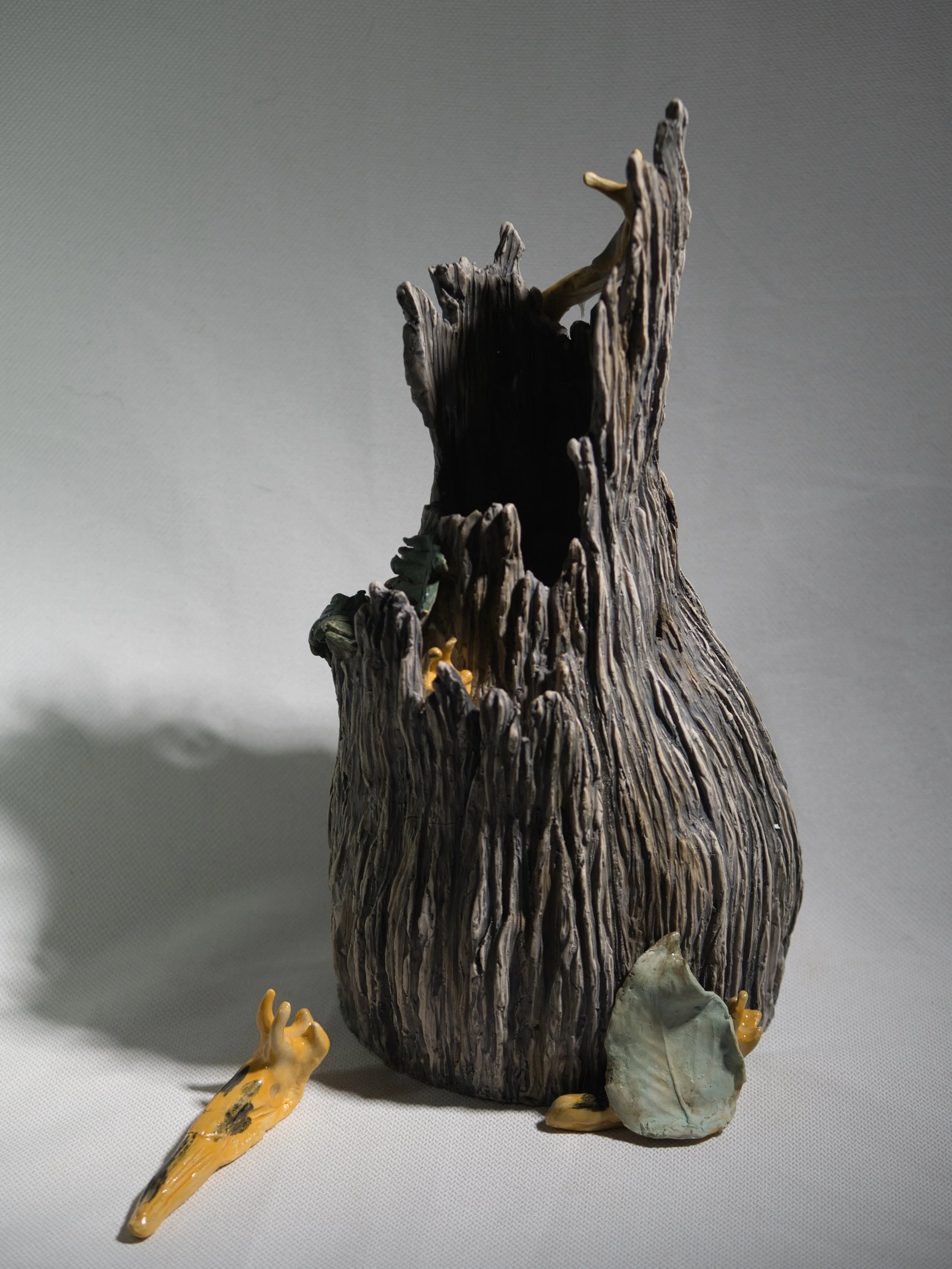
This vase mimics a dead tree, mossy and damp, with fallen leaves offering the slug both a hiding place and a snack. It was thrown on the wheel, hand-carved, and finished with underglaze — with real moss added to the ceramic surface.